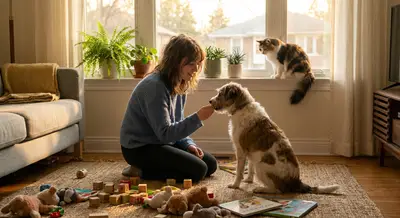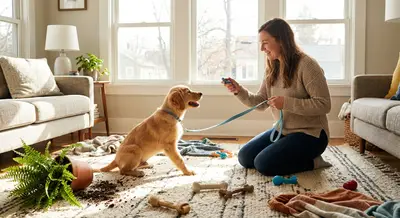
From Chaos to Calm: Pet Training Secrets Every Owner Should Know
Bringing a new pet home is exciting, but those first days (and nights!) can feel a bit like controlled chaos. Chewed shoes, 3 a.m. zoomies, barking at shadows—sound familiar? The good news: most of these “problems” are simply unmet needs and unclear communication. With the right training approach, you can transform daily frustrations into bonding moments and raise a confident, well-mannered companion. This guide covers practical, science-backed training tips you can start using today—no special equipment or advanced skills required.
Understanding How Pets Learn (So You Can Train Smarter)
Before teaching cues like “sit” or “stay,” it helps to understand how your pet’s brain connects actions to outcomes.
Animals repeat behaviors that are rewarding and avoid those that feel scary or pointless. This is the backbone of positive reinforcement training, which focuses on rewarding the behaviors you want instead of punishing the ones you don’t.
Key principles to keep in mind:
- Timing matters. Rewards need to happen within 1–2 seconds of the behavior for your pet to connect cause and effect.
- Be specific, not vague. You’re not rewarding your pet for being “good” in general; you’re rewarding “four paws on the floor,” “sitting quietly,” or “looking at you instead of the squirrel.”
- Repetition builds habits. Just like humans, pets learn through consistent practice in many different scenarios.
- Feelings drive behavior. Fear, stress, and frustration can derail training. A calm, safe pet learns faster and more reliably.
- Your body language is loud. Pets read your posture, tone, and movements often more than your words.
When you look at behavior through this lens, “stubbornness” is usually confusion, distraction, or anxiety—not defiance.
Setting Your Pet Up for Success: Environment and Routine
Training doesn’t start when you say “sit.” It starts with the world your pet lives in every day. You’ll progress much faster if your environment makes good behavior easy and mistakes harder.
Here’s how to set the stage:
- Create a safe base. A crate, cozy bed, or quiet corner gives your pet a place to decompress and can prevent problem behaviors that come from overstimulation.
- Manage, don’t just correct. Use baby gates, playpens, leashes, and closed doors to limit access to trouble spots (like kids’ rooms or the trash can) while your pet is still learning.
- Stick to a predictable routine. Regular feeding, potty breaks, playtime, and sleep help reduce anxiety and make training more successful.
- Match energy needs. Under-exercised pets are harder to train. Mental enrichment (puzzle feeders, sniff walks, training games) is as important as physical exercise.
- Keep sessions short and sweet. Aim for 3–5 minute mini-sessions several times a day, especially for young or easily distracted animals.
Think of management tools and routines as training “cheat codes”—they make it much easier for your pet to make the right choice.
Positive Reinforcement: The Heart of Modern Pet Training
Positive reinforcement isn’t just “giving treats.” It’s a structured way to clearly say, “Yes, that’s what I love—do that again!”
Common rewards include:
- Small, soft treats (pea-sized or smaller)
- Play with a favorite toy
- Praise in a happy, warm tone
- Access to something they want (going outside, greeting a person, sniffing a tree)
To use positive reinforcement effectively:
- Choose a reward your pet truly values. Many dogs work best for tiny food rewards; some cats prefer a lick of wet food; some pets love a quick play burst.
- Mark the exact moment. Some owners use a clicker or a marker word like “Yes!” at the instant the desired behavior happens, then deliver the reward.
- Reward generously at first. When a behavior is new or difficult, reward almost every successful attempt.
- Gradually get more selective. Once your pet understands, start rewarding the best versions—faster sits, calmer downs, longer eye contact.
- Phase in real-life rewards. Over time, let life itself become the reward: “Sit” to get the leash on, “down” to earn permission on the couch, “quiet” to get your attention again.
This approach not only teaches manners but also builds trust and enthusiasm. Your pet learns that listening to you predicts good things.
Core Skills Every Dog Should Know (and How to Teach Them)
While every household is different, a few core cues make life safer and smoother for most dogs.
1. Sit
“Sit” is a foundation skill that helps with impulse control.
How to teach:
- Hold a treat just above your dog’s nose.
- Slowly move it back over their head; as the nose goes up, the rear usually goes down.
- The moment their bottom hits the ground, say “Yes!” and give the treat.
- Add the word “Sit” right before you lure, once your dog seems to understand the motion.
- Practice in different rooms, then in the yard, then on calm walks.
2. Down
“Down” helps your dog settle and is especially useful in busy homes.
How to teach:
- Ask for a sit first.
- Place a treat at your dog’s nose, then slowly lower your hand straight down to the floor between their paws.
- As they slide into a lie-down, say “Yes!” and reward.
- Add the cue word “Down” as your hand starts moving, once they follow the lure consistently.
3. Come (Recall)
A reliable “come” can literally save your dog’s life.
Foundation steps:
- Start indoors or in a fenced yard with no distractions.
- Crouch down, open your arms, and say your dog’s name + “Come!” in a cheerful voice.
- When they turn toward you, start praising, then give a jackpot of 3–5 small treats when they reach you.
- Never call your dog for something unpleasant (like nail trims) without rewarding afterward.
- Gradually increase distance and mild distractions, using a long line for safety in open areas.
4. Leave It
“Leave it” stops your dog from grabbing dangerous or inappropriate items.
Simple version:
- Hold a treat in your closed fist. Let your dog sniff, lick, and paw—ignore all attempts.
- The moment they move their head away or pause, say “Yes!” and give a different treat from your other hand.
- Add the cue “Leave it” as they approach your fist.
- Progress to placing treats on the floor under your hand, then uncovered but supervised.
Practice these a few times daily in very short bursts to keep it fun and engaging.
Essential Training for Cats (Yes, Really!)
Cats are highly trainable; they just need slightly different motivation and pacing.
Key cat training basics:
- Use very high-value rewards. Tiny bits of cooked chicken, tuna water, or favorite treats.
- Respect their boundaries. Short sessions (1–3 minutes) and never force interaction.
- Use a clicker or marker word. This helps bridge the gap between the behavior and the treat.
Simple skills to start with:
- Name recognition: Say their name; when they look at you, click/mark and treat.
- Targeting: Present a finger or a small target stick; when your cat boops it with their nose, mark and treat. This can later guide them onto a scale, into a carrier, or off a counter.
- Carrier training: Leave the carrier out as part of the furniture, feed near and then inside it, and reward any exploration. Gradually work up to closing the door briefly, then longer, always pairing with treats.
Environment is especially crucial for cats—vertical space (cat trees, shelves), hiding spots, and predictable routines reduce stress and unwanted behaviors like scratching furniture or inappropriate elimination.
House Training and Litter Box Basics
Nothing strains the human–pet relationship faster than accidents in the house. Fortunately, most issues improve quickly with consistency and management.
House training dogs:
- Take them out frequently. Especially after waking, eating, playing, or drinking.
- Use a consistent spot. The familiar scents help cue them to go.
- Reward immediately after they finish. Treats should appear within a couple of seconds.
- Supervise or confine indoors. Use crates, pens, or leashes to prevent sneaky accidents.
- Clean mistakes thoroughly. Use an enzymatic cleaner to remove all odor; if they can smell it, they may reuse the spot.
If a previously trained dog starts having accidents, contact your veterinarian—medical issues (UTIs, joint pain, endocrine diseases) can be a hidden cause.
Litter box success for cats:
- Box count: Aim for at least one box per cat, plus one extra.
- Location: Quiet, low-traffic areas away from noisy appliances.
- Substrate: Many cats prefer unscented, clumping litter.
- Depth and size: Most cats like 2–3 inches of litter in a large, open box.
- Cleaning: Scoop at least once daily; wash boxes regularly.
Inappropriate elimination in cats often signals stress, pain, or illness, so a vet visit should be your first step rather than punishment.
Curbing Common Problem Behaviors Gently and Effectively
Many “problem behaviors” are natural behaviors expressed in the wrong context. Your role is to:
- Prevent rehearsal of the unwanted behavior.
- Teach an appropriate alternative.
- Reward the alternative generously.
Jumping on people
- Manage greetings with a leash or baby gate.
- Only give attention when all four paws are on the floor or when your dog sits.
- Turn away calmly if they jump; mark and reward the instant they stop.
Barking
- Identify the trigger: boredom, fear, alerting, or demand barking.
- Increase exercise and mental games for boredom.
- For alert barking, calmly thank them (“All done, thank you”) and then cue another behavior like “Come” or “Go to bed,” reward when they comply.
- Avoid yelling; it often sounds like you’re barking along.
Chewing and scratching
- Provide legal outlets: chew toys, food puzzles for dogs; scratching posts and boards for cats.
- Make inappropriate targets less appealing (covers for couch corners, double-sided tape in problem areas).
- Reward your pet when they choose the correct object.
Punishment (shouting, hitting, “alpha rolls,” spraying with water) can damage trust and often makes behavior worse, especially if fear or anxiety is involved. Focus on guidance, not intimidation.
Socialization: Raising Confident, Resilient Pets
Early, positive exposure to the world is one of the most powerful investments you can make in your pet’s future behavior.
For puppies:
- Between about 3–14 weeks is a critical socialization window.
- Gently expose your puppy to:
- Different people (ages, appearances, movement styles)
- Surfaces (grass, concrete, tile, carpet)
- Sounds (doorbells, traffic, vacuums)
- Environments (vet offices, quiet stores that allow dogs)
- Pair each new experience with praise and treats; never force interaction if they seem overwhelmed.
For adult dogs and adopted pets:
- Go slower but follow the same principles—distance, choice, and rewards.
- Watch body language: tucked tail, lip licking, yawning, or turning away means they may need more space.
For cats:
- Socialization is most critical before 9–12 weeks, but older cats can still build positive associations.
- Introduce new experiences gradually: new rooms, gentle visitors, carrier time, and handling.
- Always let the cat choose to approach and retreat.
Thoughtful socialization can prevent fear-based problems like aggression, excessive barking, and hiding.
When to Call in a Professional
Sometimes, love and good intentions aren’t enough, especially when safety or severe stress is involved. Reach out for professional help if you see:
- Aggression toward people or other animals (growling, snapping, biting)
- Severe fear (shutting down, shaking, hiding constantly)
- Sudden behavior changes
- Persistent house-soiling despite consistent training
- Self-harm behaviors (excessive licking, chewing, tail chasing)
Look for:
- Certified trainers or behavior consultants who use force-free, science-based methods.
- Veterinary behaviorists (DACVB) for complex or severe behavior issues, especially when medication might be appropriate.
The earlier you get help, the easier and kinder it is for everyone.
Conclusion
Training isn’t about creating a “perfect” pet—it’s about building a shared language and a relationship based on trust. When you use positive reinforcement, clear boundaries, and thoughtful management, your pet learns what you want in a way that feels safe and rewarding. Progress may be gradual and sometimes messy, but every small win—one quiet greeting, one successful recall, one peaceful evening—is a step toward the calm, connected life you imagined when you first brought your companion home.
Be patient with your pet, but just as importantly, be patient with yourself. You’re both learning. Celebrate the little victories, adjust when something isn’t working, and don’t hesitate to ask for professional support. With time, consistency, and kindness, chaos really can turn into calm.
Sources
- American Veterinary Medical Association – Behavioral Health Resources – Overview of common behavior issues and guidance on when to seek professional help
- American College of Veterinary Behaviorists – Information on veterinary behavioral medicine and finding a board-certified veterinary behaviorist
- American Kennel Club – Positive Reinforcement Training – Detailed explanation of positive reinforcement with practical dog training tips
- Ohio State University Indoor Pet Initiative – Evidence-based advice on creating optimal environments and behavior support for dogs and cats
- Cornell University College of Veterinary Medicine – Dog Behavior Problems – Educational articles on common behavior issues and humane training approaches