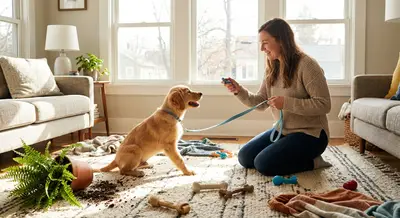
Calm, Confident, and Kind: A Modern Guide to Pet Training That Actually Works
Training your pet isn’t about becoming a “pack leader” or drilling commands like a drill sergeant. It’s about building a language you both understand, so daily life feels calmer, safer, and more fun for everyone. Whether you’ve just brought home a new puppy, adopted an adult rescue, or you’re finally ready to work on your cat’s 3 a.m. zoomies, the right training approach can transform your relationship in the best way.
This guide walks you through kind, science-backed training strategies you can start using today—no harsh methods, no guilt, just clear, practical steps that respect both you and your pet.
The New Rules of Pet Training: Science Over Myths
For years, pet owners were told they had to be “dominant,” “alpha,” or “in charge” by using punishment and intimidation. Modern animal behavior research paints a very different (and much kinder) picture.
Positive reinforcement training—rewarding behaviors you like instead of punishing those you don’t—is now the gold standard among veterinarians and behavior experts. It’s effective, safer, and better for your pet’s emotional health.
Key principles to understand:
- Behavior that is rewarded is more likely to repeat. This is the foundation of positive reinforcement.
- Pets do what works for them. If jumping gets attention, they’ll jump. If sitting calmly gets treats and love, they’ll sit calmly.
- Punishment has serious downsides. Yelling, leash jerks, alpha rolls, or shock collars can cause fear, anxiety, and even aggression—and often don’t fix the root problem.
- Stress shuts down learning. A scared or overwhelmed pet can’t learn well; a relaxed, engaged pet learns quickly.
- Training is a conversation, not a contest. You’re teaching your pet what pays off, not “winning” a power struggle.
When you shift from “How do I stop this?” to “What do I want instead, and how can I reward that?”, training becomes clearer, kinder, and far more successful.
Setting the Stage: Preparing for Training Success
Before you teach a single cue, set your pet—and yourself—up for consistent wins.
1. Choose irresistible rewards
Find what your pet truly loves:
- Dogs: soft treats (chicken, cheese, commercial training treats), favorite toy, tug games, sniffing time, praise.
- Cats: tiny food rewards (chicken, tuna water, lickable treats), wand toy play, chin scratches, access to a favorite perch.
- Small pets (rabbits, guinea pigs, etc.): safe veggies or pellets, gentle petting (for social individuals), tunnel time or digging boxes.
Use small, pea-sized treats so you can reward many times without overfeeding.
2. Pick a training “marker”
A marker is a brief signal that means “Yes, that’s it! Reward is coming.” It helps your pet understand exactly which behavior you liked.
You can use:
- A clicker (a small device that makes a distinct click sound)
- A marker word, like “Yes!” or “Good!”
How to teach it (charging the marker):
- Say your marker word or click.
- Immediately give a treat.
- Repeat 15–20 times.
Soon, your pet will hear the marker and look excited because they know a reward is coming. Now you can use it during training to clearly “highlight” good choices.
3. Keep sessions short and sweet
- Aim for 3–5 minutes, 2–4 times per day.
- Stop before your pet gets frustrated or bored.
- End on a small success: one easy behavior, one reward, and you’re done.
Short, frequent, successful sessions beat long, exhausting ones every time.
Teaching the Essentials: Core Skills Every Pet Should Know
You don’t need a dozen fancy tricks. A small set of reliable, practical cues can make life dramatically easier. Here’s how to teach them with positive reinforcement.
1. “Name = Pay Attention”
Your pet’s name should mean: “Look at me; something good is coming.”
How to teach it:
- Say your pet’s name once, in a happy tone.
- When they glance at you (even briefly), mark (“Yes!” or click) and treat.
- Repeat in different rooms and at different times.
- Gradually add mild distractions (TV on, someone walking by).
Avoid using their name repeatedly when you’re frustrated or when nothing good follows. The name should stay a positive, meaningful cue.
2. A Solid “Sit” (Your Everyday Reset Button)
Sit is more than a trick; it’s a great default behavior that makes greetings, mealtimes, and doorways calmer.
How to teach it (dogs, many cats):
- Hold a treat at your pet’s nose.
- Slowly move it up and slightly back over their head.
- As their hips lower to the floor, mark and treat.
- After several successful reps, say “Sit” just once, then lure.
- Gradually fade the lure so they sit on the word alone.
Use “Sit” to replace unwanted behaviors:
- Jumping on guests → “Sit” for attention.
- Dashing out the door → “Sit” before doors open.
- Barking at you for dinner → “Sit” to “ask” politely.
3. “Come” When Called (Recall That Really Works)
A reliable recall is a safety essential. The key is making “come” consistently rewarding and never scary.
Start Indoors:
- Say your pet’s name + “Come!” in a cheerful voice.
- Open your arms or crouch down.
- When they move toward you, mark and give a jackpot of treats and praise.
- Let them go back to what they were doing (so coming doesn’t always end the fun).
Build difficulty gradually:
- Increase the distance.
- Add mild distractions.
- Practice in safe, enclosed outdoor spaces with a long line (for dogs).
Golden rules:
- Don’t use “come” to end fun in a negative way (e.g., scolding, bath time, or going straight into the crate and leaving).
- Always reward—food, play, or something your pet loves—especially in the early stages.
4. “Leave It” and “Drop It” (Safety Lifesavers)
These cues protect your pet from dangerous or inappropriate items (medications, trash, wildlife, etc.).
Teaching “Leave It” (dogs, some cats):
- Hold a treat in your closed fist.
- Let your pet sniff/paw/lick. Say nothing.
- The instant they move away or pause, mark and reward from your other hand.
- Repeat until they quickly back off your closed fist.
- Add the cue: as they approach your fist, say “Leave it,” wait, then mark and reward when they disengage.
Teaching “Drop It”:
- Give your pet a low-value toy.
- Offer a high-value treat near their nose.
- When they drop the toy to take the treat, mark and reward.
- After a few reps, add the cue “Drop it” right before they release the item.
- Eventually, reward with both a treat and giving the toy back sometimes—so “Drop it” doesn’t always mean losing the fun.
House Manners: Preventing Common Behavior Problems
Many “bad behaviors” are normal pet behaviors happening in inconvenient ways. Instead of just saying “no,” give a clear “yes” to what you’d like them to do instead.
Jumping on People
Why it happens: Your dog wants attention and closeness.
What to do:
- Teach an alternative greeting, like sit or four paws on the floor.
- When they jump, calmly step back or turn away—no eye contact, talking, or pushing.
- The moment all paws are on the ground, mark and reward, or give attention.
- Ask visitors to do the same—no greeting until the dog is calm or sitting.
Consistency is crucial: jumping must never “work” for attention.
Barking
Barking has many causes: excitement, fear, boredom, or alerting. Your response depends on the root.
General tips:
- Increase mental and physical exercise (puzzle toys, sniff walks, training games).
- Teach a “quiet” cue:
- Wait for a brief pause in barking (even 1–2 seconds).
- Mark and reward the quiet moment.
- Add the cue “Quiet” right before you expect that pause.
- Prevent triggers where possible (cover windows, white noise, baby gates).
Avoid yelling; your dog may think you’re barking along.
Chewing and Destructive Behavior
Chewing, scratching, and digging are normal—your job is to redirect, not suppress.
- Provide legal outlets:
- Dogs: chew toys, stuffed Kongs, safe bones (as advised by your vet).
- Cats: multiple scratching posts (different materials and orientations).
- Small pets: safe chews and dig boxes.
- Supervise and manage:
- Use baby gates, crates, or closed doors to limit access when you can’t supervise.
- Pick up tempting items (shoes, remotes, kids’ toys).
- When you catch them chewing the wrong thing:
- Calmly trade for a treat or toy (don’t chase; it becomes a game).
- Redirect to an appropriate chew and praise when they use it.
Gentle Crate and Confinement Training (For Dogs and Beyond)
Crates, carriers, and safe spaces aren’t about “locking them up”; they’re about giving your pet a secure den and helping them stay safe when unsupervised or traveling.
Make the crate a happy place:
- Leave the door open with a comfy bed inside.
- Toss treats or feed meals in the crate.
- Offer special chews or stuffed food toys only in the crate.
- Once your pet enters willingly, briefly close the door, then open and reward.
- Slowly extend the time with the door closed, staying nearby, then moving away.
Never use the crate as punishment, and avoid leaving a dog crated for very long periods daily. For cats and small pets, carriers and pens can be trained the same way—with food, patience, and no pressure.
Socialization Done Right: Building Confidence, Not Fear
For puppies and kittens especially, early experiences can shape behavior for life. Socialization means positive, controlled exposure to the world—not overwhelming your pet.
For Puppies
Between roughly 3–16 weeks (the critical socialization window):
- Gently expose them to:
- Different people (ages, appearances, mobility aids).
- Other friendly, vaccinated dogs.
- Variety of surfaces, sounds, and environments.
- Keep it positive:
- Pair every new experience with treats, praise, and play.
- If your puppy seems worried, increase distance, go slower, and reward calm.
Use well-run puppy classes with positive methods; avoid chaotic dog parks for very young or nervous dogs.
For Adult Pets and Rescues
It’s never “too late,” but it may take more time and care:
- Go at their pace; watch for stress signals (lip licking, yawning, avoidance, tail tucked).
- Start with low-intensity versions of triggers (farther away, quieter, fewer people).
- Pair the trigger with treats to create a new positive association.
Reading Your Pet’s Body Language: The Key to Better Training
Training is much easier when you can tell how your pet feels. Subtle signs often come before “big” behaviors like growling, hissing, or snapping.
For Dogs
Watch for:
- Relaxed: soft eyes, loose body, open mouth, neutral tail.
- Stressed/uncomfortable: whale eye (seeing the whites), lip licking, yawning, turning away, stiff body, tail low or tucked.
- Escalated: growling, baring teeth, snapping—these are warnings, not “bad manners.”
Listen to growls. Instead of punishing them, remove or change the situation and note what caused the stress.
For Cats
Watch for:
- Relaxed: slow blinks, soft body, tail loosely wrapped or gently moving.
- Concerned/irritated: ears rotating or flattening, tail tip twitching, body tensing, dilated pupils.
- Escalated: hissing, swatting, biting, puffed fur, thrashing tail.
Use body language as feedback: if your pet is too stressed, the situation or training step is too hard. Scale back and make success easier.
When to Call in a Professional
Loving your pet doesn’t mean you have to handle everything alone. Some behaviors are complex and need expert help, especially when safety or severe distress is involved.
Seek a qualified professional if you see:
- Aggression (growling, biting, lunging at people or other animals).
- Severe anxiety, panic, or destructive behavior when alone.
- Compulsive behaviors (tail-chasing, excessive licking, constant pacing).
- Sudden behavior changes (often a medical issue).
Look for:
- For dogs: force-free trainers or behavior consultants certified by organizations like:
- CCPDT (Certification Council for Professional Dog Trainers)
- IAABC (International Association of Animal Behavior Consultants)
- For complex cases: a veterinary behaviorist, who is both a vet and a behavior specialist.
Always rule out medical causes with your vet first. Pain, illness, vision or hearing changes, and hormonal issues can all lead to new behavior problems.
Conclusion
Kind, effective pet training isn’t about controlling your animal; it’s about communicating clearly and building trust. When you use rewards, patience, and an understanding of how animals learn, your home gets calmer, your pet feels safer, and everyday life becomes a lot more fun.
Start small: pick one cue (like name recognition or sit), one behavior problem to reframe (like jumping or barking), and one new habit (short daily training sessions). Over time, these tiny choices add up to a strong, respectful bond—the heart of life with any well-loved pet.
Sources
- American Veterinary Society of Animal Behavior – Position Statement on Humane Dog Training – Explains why positive reinforcement is recommended and outlines risks of punishment-based methods.
- American Kennel Club – How to Train a Dog – Practical training guides for foundational cues, house manners, and socialization.
- RSPCA – Dog Training and Behaviour – Welfare-focused advice on positive training, socialization, and dealing with common behavior issues.
- ASPCA – Dog Behavior & Training Resources – Evidence-based articles on barking, chewing, housetraining, and separation-related behaviors.
- Fear Free Happy Homes – Training & Behavior Articles – Veterinary-backed tips on low-stress, fear-free training and behavior support for dogs and cats.