The Indoor Cat Blueprint: Designing a Home Your Kitty Truly Loves
Indoor cats live safer, longer lives—but they also rely entirely on us to make their world interesting, comfortable, and secure. When their environment is dull or stressful, it shows up as scratching, zoomies at 3 a.m., weight gain, or even health issues.
This guide walks you through how to turn any home—from studio apartment to big house—into a cat-friendly “micro-kingdom” that supports your cat’s body, brain, and emotions every day.
Seeing Your Home Through Your Cat’s Eyes
Cats experience your home very differently than you do. Recognizing their natural instincts helps you design a space that feels right to them, not just convenient for you.
Cats instinctively want to climb, hide, observe, hunt, scratch, and control how close others can get. When these needs aren’t met, they may become withdrawn, anxious, or “naughty” in ways that are actually just coping strategies.
Walk through each room and ask:
- Where can my cat rest undisturbed?
- Where can they safely get up high?
- If they were a little hunter, where would they stalk, pounce, and “win”?
- Can they always escape or avoid interactions when they want space?
- Where’s the quietest, least-trafficked place for food, water, and litter?
This mindset shift—from “owning a pet” to “supporting a small predator in a human house”—is the foundation of excellent cat care.
Building a Cat-Friendly Territory: Vertical Space, Hideaways, and Safe Zones
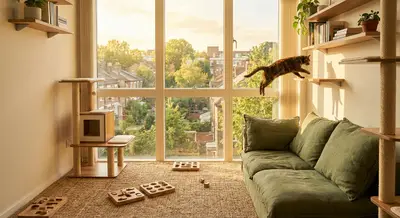
Cats feel safer—and more confident—when they can choose their vantage point. Territory isn’t just floor area; it’s height, pathways, and quiet nooks.
Prioritize three elements:
1. Vertical highways
Offer multiple places to climb and perch so your cat can travel without always using the floor.
Options include:
- Sturdy cat trees near windows
- Wall-mounted shelves or “cat bridges” (ensure they’re well anchored)
- The tops of secure furniture with safe access (like adding a step stool or shelf)
Place vertical spots near windows or in rooms where you spend time so your cat can be “with you” without being in the middle of everything.
2. Cozy hideouts
Even social cats need true retreat spaces where nobody bothers them.
Consider:
- A covered cat bed or igloo-style hideout
- A box with a soft blanket in a low-traffic corner
- Space under a side table or behind a couch that’s intentionally left accessible
Teach family members that these are “do not disturb” zones.
3. Safe zones for multi-cat homes
If you have more than one cat, safe territory matters even more. Each cat should have:
- At least one high perch they can access without passing another cat
- A clear escape route from key areas (like litter boxes and food stations)
- The option to be alone if they choose
This reduces rivalry, subtle bullying, and stress that can show up as inappropriate elimination or over-grooming.
Litter Box Setup That Cats Actually Approve Of
Many house-soiling issues come down to one thing: cats and humans having very different opinions about litter boxes.
Think of the litter box as your cat’s bathroom, not a nuisance to hide. They prefer clean, quiet, and easy to reach.
Key principles:
- Number: Aim for one box per cat, plus one extra (for example, two cats = three boxes), especially in multi-level homes.
- Location: Put boxes in low-traffic, quiet areas—but not so hidden that your cat has to navigate scary or cramped spaces to get there.
- Accessibility: Avoid tight corners or layouts where another pet could “guard” the entrance.
- Type of box: Most cats prefer larger, open-top boxes with low enough sides for easy entry. Covered boxes can trap smells and may make some cats feel cornered.
- Litter preference: Unscented, clumping litter tends to be most acceptable. Strong scents may bother your cat’s sensitive nose.
- Cleaning routine: Scoop at least once daily, fully change litter and wash boxes regularly (usually every 2–4 weeks depending on usage).
If your cat starts avoiding the box, treat it as a health or stress signal, not disobedience. A vet visit plus a review of box setup is often the fastest solution.
Food, Water, and the Art of “Cat Dining”
Mealtimes are more than nutrition—they’re also about security, comfort, and mental stimulation.
Food placement
- Avoid placing food bowls right next to litter boxes; cats instinctively prefer distance between “bathroom” and “kitchen.”
- In multi-cat homes, separate bowls so each cat can eat without competition or hovering.
- For shy or anxious cats, offering food in a quieter room can boost appetite and reduce stress.
Water strategy
Many cats don’t drink enough, especially if they primarily eat dry food.
Try:
- Multiple water stations in different rooms
- Wide, shallow bowls that don’t press on whiskers
- A cat-safe water fountain if your cat likes running water
Refresh water daily and wash bowls regularly.
Enrichment at mealtime
To tap into their hunter instincts:
- Use puzzle feeders or treat balls so your cat has to “work” for some of their food
- Hide a few kibble pieces in different safe locations for gentle “treasure hunts”
- For wet food, occasionally use lick mats or shallow plates to vary texture and pace
These strategies help prevent boredom, overeating, and food-guarding behaviors.
Daily Enrichment: Turning Boredom Into Play and Confidence
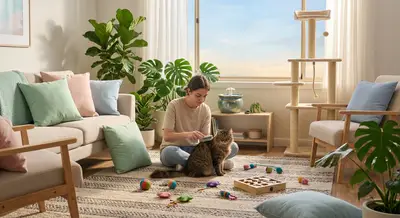
Indoor life can be safe but dull—unless you intentionally build in novelty and “jobs” for your cat. Even 10–20 minutes of focused enrichment daily can make a big difference.
Interactive play
Use toys that mimic prey:
- Wand toys that move like birds or mice
- Soft toys dragged along the floor to imitate scurrying
- Small, lightweight toys for batting and chasing
Let your cat stalk, chase, and then “catch” the toy. Ending with a small snack afterward mirrors the hunt–eat–groom–sleep cycle.
Solo play
Rotate toys every few days to keep things interesting:
- Crinkle tunnels or paper bags (handles removed)
- Soft kicker toys they can grab and bunny-kick
- Lightweight balls or springs they can bat around
Avoid leaving strings, ribbons, or toys with small detachable parts unsupervised, as these can be swallowed.
Sensory enrichment
- Provide window views with safe perches so your cat can watch birds, people, or leaves
- Use cat-safe plants like cat grass indoors (avoid toxic plants such as lilies)
- Occasionally introduce new scents with a worn T-shirt, a cardboard box from outside, or a sprinkle of catnip or silvervine—if your cat enjoys them
Remember: every cat has a different play style. Some prefer short, intense bursts of play; others enjoy longer, calmer sessions. Follow their lead.
Stress, Routine, and Emotional Safety
Cats are creatures of habit. Predictability isn’t just nice to have—it’s essential to their sense of safety.
Create a loose daily rhythm
You don’t need a rigid schedule, but try to keep:
- Mealtimes roughly consistent
- Play sessions around the same general times (for example, morning and evening)
- Quiet hours when the home is calmer, especially at night
When major changes are coming—moves, renovations, new pets, or babies—support your cat by:
- Keeping at least one room as a “stable zone” with their usual bed, litter box, and familiar smells
- Using slow, gradual introductions to new people or animals
- Offering extra hiding spots and vertical space during transitions
Watch for subtle signs of stress
Cats rarely “act out” on purpose; they signal discomfort through behavior:
- Hiding more than usual
- Changes in grooming (over-grooming or looking unkempt)
- Changes in appetite, sleep, or social behavior
- Increased vocalization or sudden irritability
When you notice something off, check the basics: health, environment, routine, and social dynamics. Your vet is a key partner in sorting out what’s physical, what’s emotional, and how to help.
Working With, Not Against, Your Cat’s Personality
Just like people, cats have distinct personalities: bold, shy, clingy, independent, talkative, stoic. Good care honors who they are instead of trying to turn them into a different kind of pet.
For shy or nervous cats
- Approach indirectly: sit nearby and let them come to you
- Use calm voices and slow movements
- Offer treats or play from a comfortable distance to build trust
For energetic or mischievous cats
- Add more structured play to burn energy in a healthy way
- Give them “legal” outlets for climbing and scratching
- Use puzzle feeders to engage their busy brains
For affectionate or “velcro” cats
- Set gentle boundaries while still giving lots of connection: cozy spots near where you work, scheduled cuddle times
- Consider adding more vertical space near your frequently used areas so they can be close without being underfoot
Meeting your cat where they are—rather than where you wish they’d be—builds a stronger bond and a more harmonious home.
Conclusion
Great cat care is less about buying the fanciest gear and more about understanding what your indoor cat quietly needs from their world: safety, predictability, room to be a little wild, and the freedom to choose when to engage and when to retreat.
By adjusting your home to support climbing, hiding, hunting play, clean litter habits, and emotional safety, you create a space where your cat doesn’t just exist—they thrive.
Small changes add up. Pick one room, make a few thoughtful tweaks, watch how your cat responds, and build from there. Your home can become the kind of territory your cat would choose, if they could design it themselves.
Sources
- Cornell Feline Health Center – Indoor Cats – Overview of indoor cat welfare, enrichment, and environmental needs
- American Association of Feline Practitioners – Feline Environmental Needs Guidelines (PDF) – Expert guidance on creating a healthy, low-stress environment for cats
- International Society of Feline Medicine – House-Soiling in Cats – Detailed advice on litter box setup, location, and solving toileting issues
- ASPCA – Enriching Your Cat’s Life – Practical enrichment ideas for indoor cats, including play and environmental changes
- Ohio State University Indoor Pet Initiative – Cats – Research-based information on environmental management, stress reduction, and behavior in indoor cats